

Electrolytic Copper Chloride Solution Demonstrator Electrolysis Experiment Teaching Equipment Electrolysis of Copper Chloride Solution Demonstrator Electrolytic Cupric Ch
Product details
| Management number | 220387557 | Release Date | 2026/05/03 | List Price | $16.96 | Model Number | 220387557 | ||
|---|---|---|---|---|---|---|---|---|---|
| Category | |||||||||
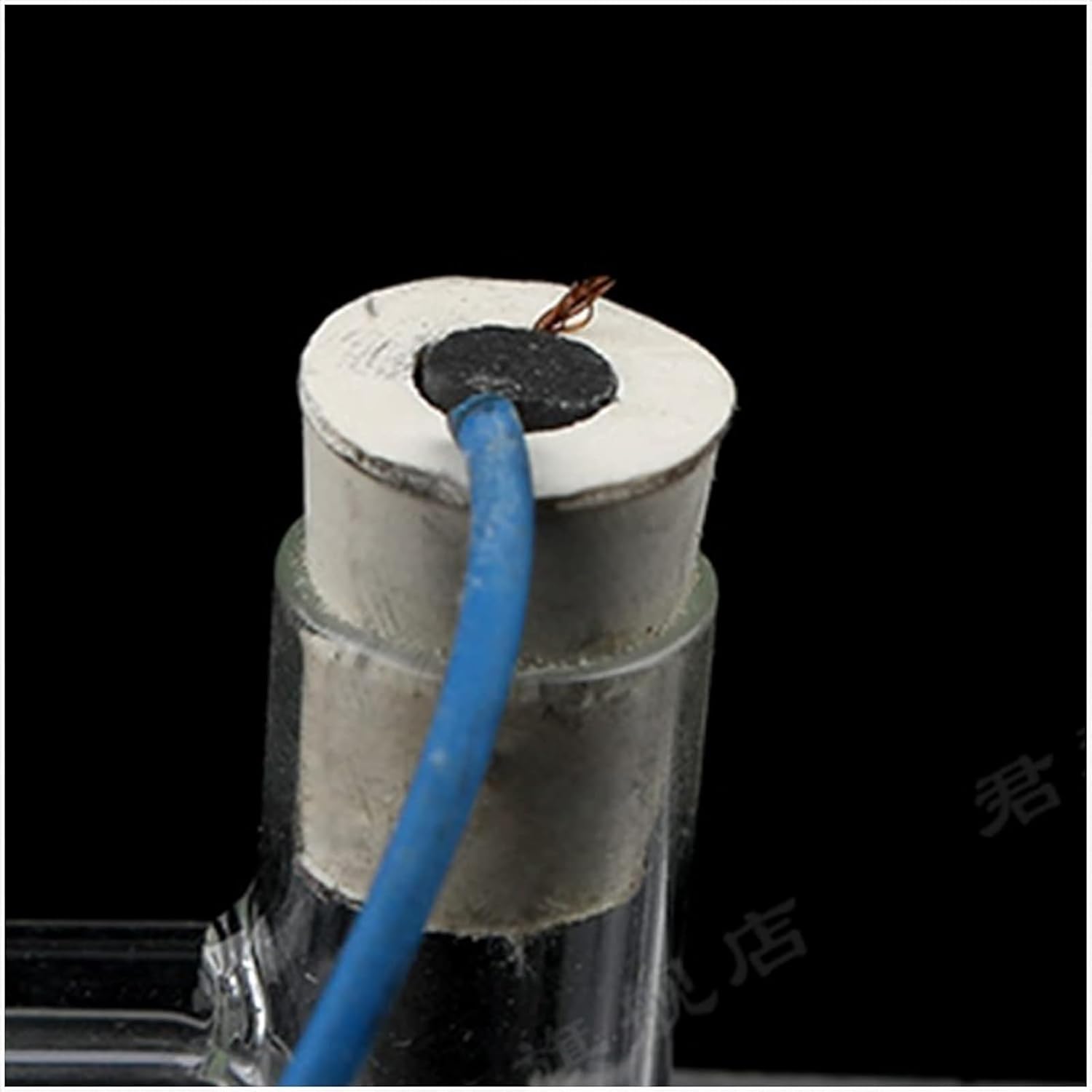
Use:Demonstrate that copper chloride solution chemically changes when conducting electricity to produce copper and chlorine gas.Usage:Inject the cupric chloride solution into the U-shaped branch pipe, insert two graphite carbon rods as electrodes, and place the moistened potassium iodide starch test paper near the anode carbon rod to check the released gas.Shortly after the power is turned on, there is a layer of copper covering the surface of the carbon rod used as the cathode, indicating that there is copper precipitation.On the anode carbon rod, there are bubbles released. From its odor and the characteristic that it can make the wet potassium iodide starch test paper turn blue, it can be concluded that the gas released is chlorine gas.It can be seen that the copper chloride solution is subjected to the action of the current, and chemical changes occur while conducting electricity, and copper and chlorine gas are generated.Precautions for Use:1. The power supply voltage shall not exceed 24 volts DC power supply.2. Before using the instrument, pay attention to put the solution into the tube first, and finally turn on the power.3. After the experiment, pour out the solution and clean it.
- * Demonstrate that copper chloride solution chemically changes when conducting electricity to produce copper and chlorine gas.
- * Inject the cupric chloride solution into the U-shaped branch pipe, insert two graphite carbon rods as electrodes, and place the moistened potassium iodide starch test paper near the anode carbon rod to check the released gas.
- * Shortly after the power is turned on, there is a layer of copper covering the surface of the carbon rod used as the cathode, indicating that there is copper precipitation.
- * On the anode carbon rod, there are bubbles released. From its odor and the characteristic that it can make the wet potassium iodide starch test paper turn blue, it can be concluded that the gas released is chlorine gas.
- * It can be seen that the copper chloride solution is subjected to the action of the current, and chemical changes occur while conducting electricity, and copper and chlorine gas are generated.
| Manufacturer | JDXQBLD |
|---|


Bestseller ranking
Electrolyte Solutions


Customers who viewed this product also viewed
Tick Remover Tools




Correction of product information
If you notice any omissions or errors in the product information on this page, please use the correction request form below.
Correction Request Form